
Find Your Perfect Local Movers
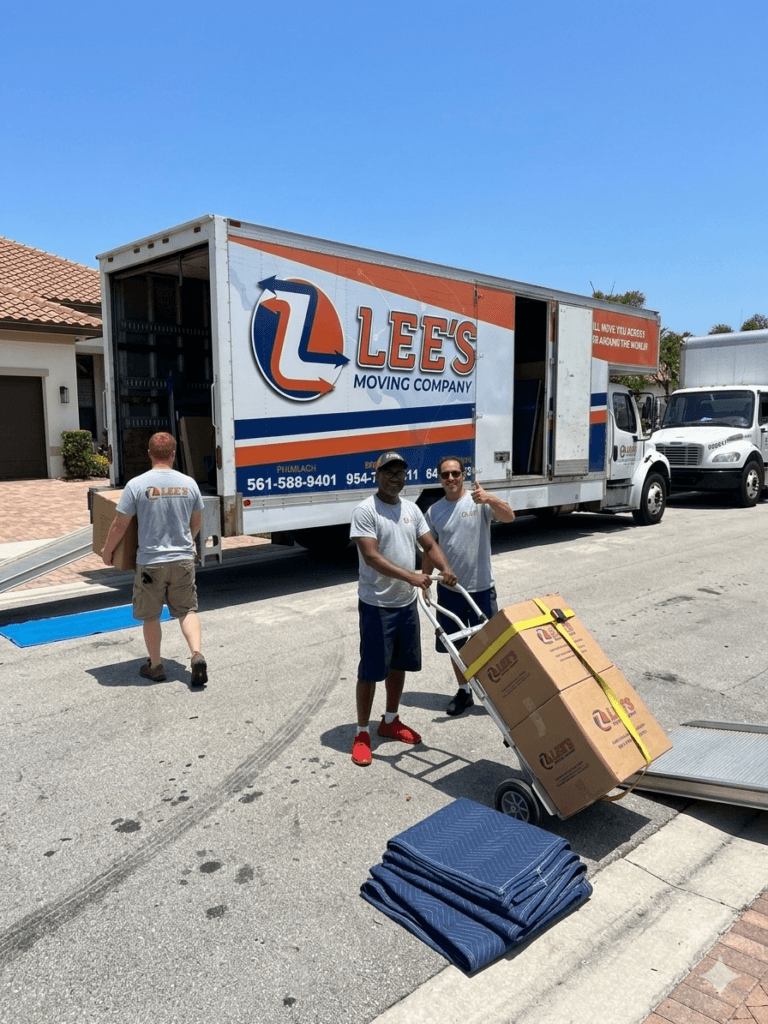
Choosing the right local moving company can prevent costly surprises and protect your belongings, whether you’re moving across town or into a nearby apartment. This guide shows how to define your move, verify licensing and insurance, read reviews for trustworthy signals, compare binding versus non-binding estimates, understand standard services and contracts, and prepare for moving day with clear post-move inspection steps. Many people confuse local movers with long-distance carriers, which leads to wrong assumptions about licensing and pricing; this article clarifies those distinctions and delivers actionable checklists to reduce risk. You will learn practical verification steps using government and industry resources, what red flags to watch for in reviews and contracts, and how to ask the exact questions that surface hidden fees. Read on for step-by-step guidance, printable-style lists, and tables that compare estimates and services so you can hire a local mover confidently.
What Are Your Moving Needs and How Do They Affect Choosing a Local Mover?
A clear definition of your moving needs determines which local moving services are appropriate and which vendors can provide them efficiently. Scope—such as a studio apartment versus a four-bedroom house—affects crew size, truck type, and whether specialty handling (pianos, antiques) is required, while access issues like narrow stairwells or restricted parking change scheduling and permit needs. Assessing size and complexity up front reduces the chance of receiving inaccurate estimates and last-minute surcharges. The next section explains how to create a reliable inventory and flag special requirements to share with prospective movers.
How to Define Your Local Move Scope and Special Requirements
Begin by creating a room-by-room inventory that counts large furniture, appliances, and specialty items; accurate counts allow movers to estimate labor and truck space. Note access constraints such as staircases, elevator reservations, narrow doorways, and distance from the truck to your door, because these factors often trigger long-carry or stair fees. Identify fragile or high-value items—pianos, pool tables, antiques—and indicate whether you need disassembly, hoisting, or custom crating, which some local movers subcontract or price as an add-on. Clear documentation of these elements leads into the vendor-sourcing step, where you present the same scope to multiple companies for comparable quotes.
Where to Find Trusted Recommendations for Local Moving Services

Use a mix of personal referrals and verified online sources to assemble a short list of candidates, favoring recent local jobs and reference contacts you can reach. Check neighborhood social groups and friends for firsthand experiences, then corroborate with platform reviews on Google, Yelp, and industry profiles that include dated photos or job details. When evaluating recommendations, prefer accounts that describe the scope, crew conduct, and how the mover resolved issues; this detail reduces the chance of relying on paid or fake reviews. After collecting recommendations, you’ll need to verify credentials and insurance to confirm a mover’s legitimacy before requesting estimates.
How Do You Verify Licensing and Insurance for Local Moving Companies?
Verifying licensing and insurance confirms legal authority to operate and establishes what protections apply to your goods during a local move. For interstate moves, USDOT/MC numbers indicate federal registration, while intrastate moves often require a state moving license and business registration; insurance types (liability, released value, full value protection) define coverage levels and claims processes. Using official lookup tools and industry resources reduces uncertainty about a company’s status. The following table lists core credentials, where to verify them, and why each matters.
Introductory table: This table helps you identify the key credentials to check and the practical significance of each credential when vetting local movers.
| Credential | Where to Verify | What It Means |
|---|---|---|
| USDOT / MC Number | Federal motor carrier registries and snapshots | Indicates federal registration for interstate transport and a record of safety/inspections |
| State Moving License | State transportation or consumer protection portals | Required for intrastate moves; confirms legal authorization to operate within the state |
| Business Registration / EIN | State business registry or secretary of state | Shows the company is registered as a legal business entity |
| Proof of Insurance | Certificate of insurance provided by mover (verify with insurer) | Confirms liability limits and the type of valuation coverage offered |
| BBB Profile / Complaints | Better Business Bureau records | Reveals complaint history and company responses to disputes |
This credential checklist clarifies which records to request and why each item matters for determining a mover’s reliability and financial responsibility.
What Are the Key Licenses and Insurance Policies to Check?
Local movers may carry different credentials depending on whether the move crosses state lines; USDOT/MC applies to interstate operations while state licenses cover intrastate work, each reflecting different regulatory oversight. Insurance typically includes general liability for property damage and valuation coverage options—released value protection pays minimal per-pound amounts, whereas full value protection covers repair, replacement, or settlement up to declared value. Always request a certificate of insurance and ask the mover to explain valuation terms in writing; ambiguous valuation language often hides inadequate coverage. Understanding these distinctions helps you compare providers based on both legal standing and financial protections for your belongings.
How to Use Government and Industry Resources to Confirm Mover Credentials
Start by searching federal registries for company snapshots to view safety records and active USDOT/MC status, then check your state’s moving license lookup to confirm intrastate authorization and any disciplinary history. Review BBB entries and consumer protection agency filings to see complaint patterns and how quickly the mover resolves disputes; frequent unresolved complaints indicate systemic problems. When a mover provides a certificate of insurance, call the insurer (using the insurer’s name on the certificate—not a phone number the mover gives) to verify policy status and limits. These verification steps reduce uncertainty and create leverage for clearer contracts and estimates.
What Should You Look for in Customer Reviews and How to Spot Red Flags?
Customer reviews are useful signals about punctuality, crew behavior, damage rates, and pricing transparency, but reviewers vary in reliability so cross-checks are essential. High-quality reviews include photos, dates, and specifics about the scope; consistent mentions of the same problem across platforms indicate real patterns rather than isolated incidents. Watch for red flags like large cash-only deposit requests, refusal to provide written estimates, or inconsistent company details across listings. The next subsection lists priority platforms and tactics to validate authenticity before you contact a mover.
Where to Find Reliable Customer Reviews and Testimonials for Local Movers
Prioritize multiple platforms—search local review sites, platform-verified profiles, and social media groups—looking for reviews that include photos and job context to corroborate claims. Cross-reference reviewer activity to determine whether reviewers are local and have posted across time, which increases credibility compared to single-review accounts. Contact recent reviewers when possible to ask follow-up questions about timeliness, crew professionalism, and how the mover handled issues; direct confirmation strengthens trust. After assessing reviews, you should use a red-flag checklist to filter out risky providers.
Intro to list: Below is a concise list of red flags drawn from review patterns and common consumer complaints.
- Verbal-only estimates: Movers who refuse to provide written quotes or contracts.
- Large cash deposits: Requests for significant cash upfront without receipts or card options.
- Very low initial quotes: Estimates far below competitors that jump dramatically on moving day.
- Unclear or missing insurance proof: Inability to show a valid certificate of insurance.
- Poor complaint resolution: Repeated unresolved complaints on BBB or consumer sites.
Spotting these warnings in reviews helps you eliminate high-risk companies early, and addressing any suspected issue directly with the mover before signing reduces the chance of disputes; the next section explains how to obtain and compare binding versus non-binding estimates to secure transparent pricing.
How to Obtain and Compare Moving Estimates: Binding vs. Non-Binding Quotes Explained
Understanding estimate types lets you control financial risk: binding estimates lock the total price (unless you add services), non-binding estimates provide an approximation that can change, and guaranteed not-to-exceed estimates set a ceiling but may allow adjustments within the ceiling. An in-home or video survey produces the most accurate quote because it reveals access constraints, item sizes, and packing needs that affect labor and time. When comparing quotes, ensure each covers the identical scope so differences in price reflect service levels rather than mismatched assumptions. The table below compares estimate types, what they cover, and the customer risk for quick reference.
Introductory table: Use this comparison to quickly understand which estimate format offers which protections and when to prefer each option.
| Estimate Type | What it Covers | Risk to Customer / When to Use |
|---|---|---|
| Binding Estimate | Fixed total price for documented scope | Low risk for customer; use when scope is certain and you want price certainty |
| Non-Binding Estimate | Approximate cost based on survey | Higher risk of upward adjustments; use for flexible scheduling with scope uncertainty |
| Guaranteed Not-to-Exceed | Final price will not exceed stated ceiling | Moderate risk; protects against surprises while allowing scope-based adjustments |
This comparison helps you request the right estimate type for your needs and prepares you to ask targeted questions that ensure apples-to-apples comparisons between movers.
What Questions Should You Ask to Understand Moving Estimates Clearly?
Ask explicit questions about the estimate type, what services are included, and which surcharges could apply, and request itemized written confirmation to avoid ambiguity. Confirm whether the price includes packing materials, disassembly/reassembly, fuel surcharges, stair or long-carry fees, and any hourly minimums for local moves. Ask how the mover documents inventory and whether extra charges apply for bulky or specialty items; request examples of typical surcharges and the conditions under which they are applied. After clarifying questions, insist on a written estimate that matches the answers you received.
Intro to list: Here are must-ask questions to include when you contact movers for quotes.
- What type of estimate is this (binding, non-binding, guaranteed not-to-exceed)?
- Does the quote include packing materials, labor, and disassembly/reassembly?
- What surcharges could apply (stair fees, long carry, fuel, elevator reservation)?
- How is valuation/insurance handled and what are the limits?
- What payment methods are accepted and is a deposit required?
Asking these questions surfaces hidden fees and clarifies liability, enabling direct comparison of detailed, written estimates; next, learn how to identify hidden fees and insist on transparent, itemized pricing.
How to Identify Hidden Fees and Ensure Transparent Pricing
Hidden fees often appear as vague line items (accessorials, handling fees) or as conditional surcharges triggered on moving day, so require an itemized quote that lists each potential extra and the rate or condition that triggers it. Compare quotes by matching the scope exactly—same item list, same access conditions—to surface differences due to extra fees rather than service levels. Ask movers to define terms like “long carry” in feet or minutes and to state stair fees per flight, which removes ambiguity. When you receive a final invoice, reconcile charges against the written estimate and raise discrepancies immediately with the mover.
What Local Moving Services Are Typically Included and How to Evaluate Contracts?
Local moving companies generally include loading, transport, and unloading as core services, while packing, specialty handling, storage, and crating are often sold as add-ons; understanding which services are standard prevents surprise charges. Contracts should clearly state the estimate type, valuation coverage, deposit policy, cancellation terms, and the claims process with timelines; ambiguous contract language is a risk factor. Use the table below to see common services, whether they’re typically included, and notes on extra fees to watch for when evaluating proposals and agreements.
Introductory table: This table clarifies which services are commonly part of a local moving package and when you should expect additional charges.
| Service | Typically Included? | Notes / Common Extra Fees |
|---|---|---|
| Loading / Transport / Unloading | Yes | Usually included in base price for local moves |
| Packing Materials | Sometimes | Movers may charge for boxes, padding, and tape |
| Packing Service | No (add-on) | Charged by hour or per-box; full-service moves cost more |
| Furniture Disassembly / Reassembly | Sometimes | Small items may be included; complex disassembly often extra |
| Specialty Item Handling (piano, safe) | No (specialty) | Requires skilled crew/equipment and additional insurance |
| Storage-in-Transit | No (add-on) | Daily or monthly fees; verify security and access terms |
This service roadmap helps you identify likely extras and negotiate a contract that reduces day-of surprises; next we outline how to review contracts and payment terms step-by-step.
Which Services Should You Expect from a Local Moving Company?
Expect baseline services—loading, transport, and unloading—to be included in the quoted price for a local same-city move, but verify whether packing, materials, or disassembly are included or priced separately. Specialty items such as pianos, pool tables, or large safes typically require specialists and carry dedicated fees and insurance requirements; ask whether the mover will subcontract specialty handling. Clarify whether the mover provides protective padding, furniture covers, and floor protection in your contract, because these are sometimes omitted from base packages. After mapping services, you should scrutinize contract clauses that govern deposits, cancellations, and valuation.
How to Review Contracts and Payment Terms Before Hiring Movers
Read the entire contract and confirm that the estimate type, itemized services, valuation/insurance selections, deposit amount, and claims window are all explicitly stated in writing. Avoid companies that pressure you to pay the full balance in cash on delivery or demand large nonrefundable deposits—prefer card payments or verified escrow arrangements where possible. Note cancellation and rescheduling terms, including any fees or timelines for refunds, and request clarification on ambiguous clauses before signing. Once the contract is clear and signed, prepare for moving day by confirming logistics and point-of-contact details.
How to Prepare for Moving Day and What to Do After the Move?
Preparation and clear day-of communication minimize delays and reduce the likelihood of damage or disputes during the move. Confirm arrival windows, parking or permit needs, a single point of contact for the crew, and any building rules or elevator reservations well before moving day. During loading and unloading, conduct inventory checks, supervise the placement of labeled items, and document any pre-existing damage. After the move, inspect items immediately, compare against the inventory and contract, and follow the mover’s claims process with dated photos and written descriptions if damage occurred.
What Are Best Practices for Communicating and Coordinating with Your Movers?
Designate one primary point of contact and provide that person’s mobile number and contingency contact details to the mover to streamline instructions and reduce confusion. Confirm the arrival window and any parking or permit arrangements in writing at least 48 hours before moving day, and provide clear building access instructions or gate codes as needed. Prepare labeled boxes and a prioritized loading list to optimize crew workflow, and keep essential items (documents, medications) separate and with you. Clear pre-move communication creates predictable logistics and sets expectations for the subsequent inspection and claims process.
Intro to list: Below is a concise on-the-day communication checklist to share with your mover and household.
- Confirm arrival window and point of contact before the move starts.
- Reserve parking or request loading zone permits if required by your building or city.
- Label boxes clearly and list fragile contents to guide packing and placement.
- Keep an essentials bag with important items you will need immediately after the move.
- Walk the crew through special handling instructions for fragile or valuable items.
Using this checklist helps the crew work efficiently and documents agreed actions for later reference; the next section outlines how to inspect items after unloading and initiate a claim if necessary.
How to Conduct Post-Move Inspections and Handle Claims if Needed

Inspect all furniture and boxed items immediately upon delivery, checking for scratches, dents, or broken items while cross-referencing the inventory and contract line items. Photograph any damage with timestamps and collect sign-off from the crew on any noted damage or exceptions before they leave, because movers sometimes require immediate written acknowledgment to process claims. File claims promptly according to the mover’s specified timeframe and follow the insurer’s or mover’s claims procedures, keeping copies of all documents and communication. A structured inspection and timely claim filing improve the likelihood of full resolution and recovery.
Frequently Asked Questions
What should I do if my local mover damages my belongings during the move?
If your local mover damages your belongings, it’s essential to conduct a thorough inspection immediately upon delivery. Document any damage with photographs and note the specifics on the inventory list. Most moving companies have a claims process, so file your claim as soon as possible, adhering to their specified timeframe. Ensure you keep copies of all documentation and communication related to the claim. Prompt action and clear documentation increase the chances of a successful resolution.
How can I ensure that my local mover is reputable and trustworthy?
To ensure your local mover is reputable, start by gathering recommendations from friends, family, and online reviews. Look for movers with positive feedback on multiple platforms, focusing on detailed accounts of their experiences. Verify the mover’s credentials, including licensing and insurance, through official state and federal resources. Additionally, check their Better Business Bureau (BBB) profile for any complaints and how they were resolved. A thorough vetting process helps you select a trustworthy moving company.
What are the typical costs associated with hiring local movers?
The costs of hiring local movers can vary widely based on several factors, including the size of your move, distance, and additional services required. On average, local moves can range from $300 to $1,500, depending on the complexity and duration. Additional costs may arise from packing materials, specialty item handling, or long-carry fees. Always request detailed estimates and clarify what services are included to avoid unexpected charges on moving day.
Are there any specific items that local movers will not transport?
Yes, local movers typically have restrictions on transporting certain items. Hazardous materials, such as flammable liquids, chemicals, and explosives, are generally prohibited. Additionally, items like perishable food, plants, and pets may not be allowed due to safety and health regulations. It’s crucial to check with your moving company about their specific policies regarding restricted items to ensure compliance and avoid complications during your move.
How far in advance should I book my local movers?
It’s advisable to book your local movers at least 4 to 6 weeks in advance, especially during peak moving seasons (spring and summer). Early booking allows you to secure your preferred dates and gives you ample time to compare estimates and services. If you’re moving during a busy period, consider booking even earlier to ensure availability. Last-minute arrangements can lead to limited options and potentially higher costs.
What should I do if I need to change my moving date?
If you need to change your moving date, contact your moving company as soon as possible. Most companies have policies regarding rescheduling, and early notification increases the likelihood of accommodating your new date. Be aware that changes may incur additional fees, especially if your new date falls during peak moving times. Always confirm the new arrangements in writing to avoid any misunderstandings on moving day.
Can I pack my belongings myself, or should I hire the movers to do it?
You can certainly pack your belongings yourself, which can save you money. However, if you choose to do so, ensure that you use proper packing materials and techniques to protect your items. If you have fragile or valuable items, consider hiring professional packers for those specific items to ensure they are handled correctly. Discuss your packing preferences with your mover, as some companies may offer packing services as an add-on to their moving packages.